Rent Aerial Work Platforms and Construction Machinery in La Chaux-de-Fonds
La Chaux-de-Fonds operates under two conditions that show up on every job site: an industry that works in micrometres, and a climate that compresses construction into a short season. Anyone renting aerial work platforms and construction machinery here therefore chooses not just by height and load capacity, but by drive type, tyres, equipment cleanliness and timing of the job. Luibl rents mobile elevating work platforms, telehandlers, excavators and forklifts to industrial service providers, building services and ventilation companies, facade and painting firms, construction companies and works yards in the city and in the Neuchatel Jura. The right model follows from the conditions on site: access route, ceiling height, floor load capacity, available footprint and the site operator's requirements.
Watchmaking and Microtechnology: Maintenance During Ongoing Production
Watchmaking and microtechnology production runs in areas where temperature, humidity and particle levels are monitored and logged. A machine entering that environment becomes part of the system — it must not introduce exhaust fumes, abrasion residue or dust. In practice this means: electric drive, non-marking tyres, a cleaned chassis and an agreed route through the area. The site operator sets the requirements, not the rental company; obtain approval before ordering equipment and pass the requirements on to us.
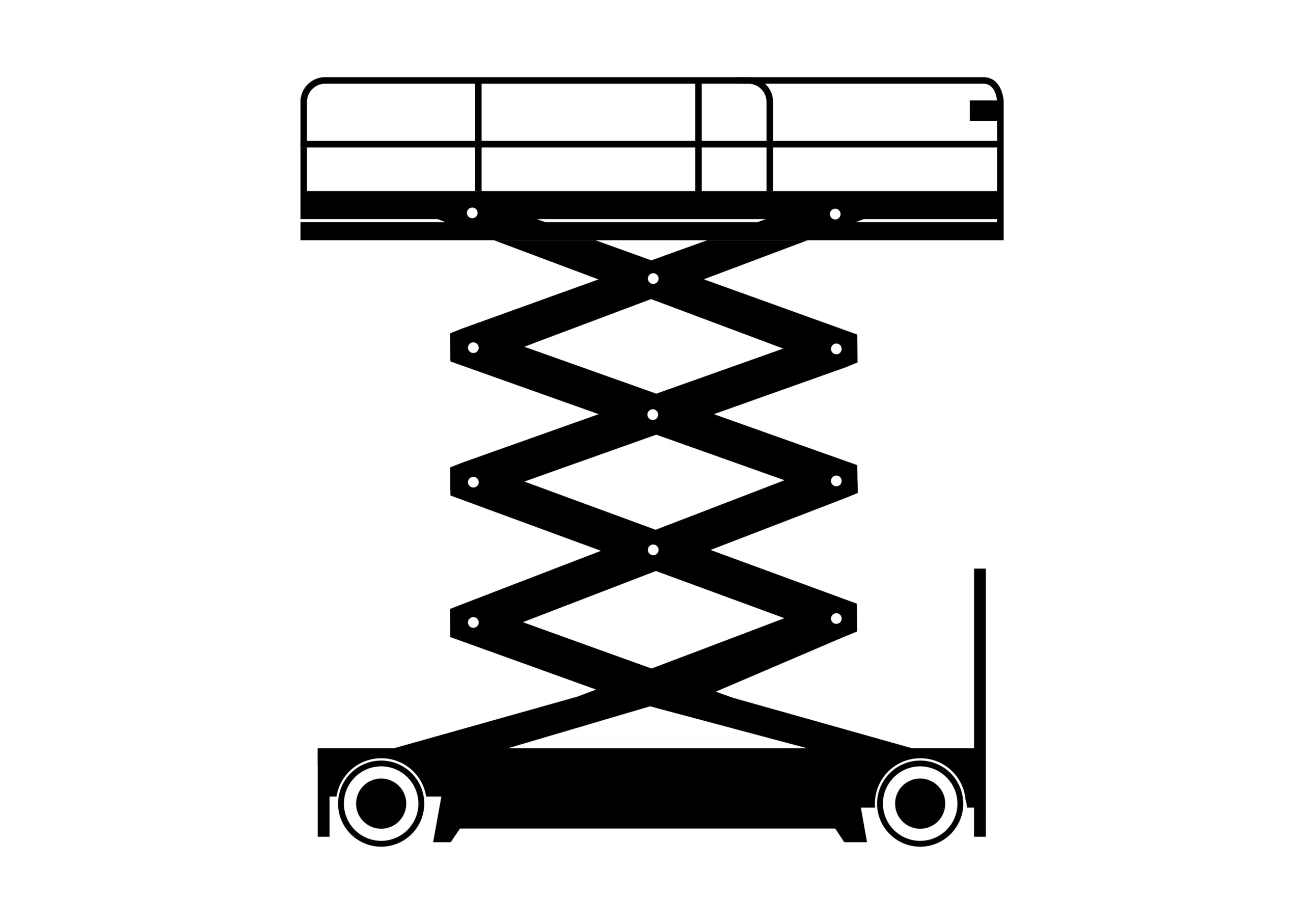
Typical work involves building services above the production floor: ventilation and air conditioning units, filter changes, service lines, lighting, ceiling structures, fire protection systems. Electric scissor lifts cover 6,30 to 33,00 m working height and carry 227 to 1.000 kg — enough reserve for tools, spare parts and measuring equipment. Where little space remains between machines, switch cabinets and racking, mast lifts with 10,00 to 12,65 m and a 200 kg platform capacity are often the only design that still fits through the aisle.
If the platform needs to reach the ceiling over an installed system, electric articulated boom lifts with 10,89 to 28,00 m working height approach the work location from the side; in high-bay racking areas, high-bay scissor lifts with 18,50 to 33,00 m and 450 to 1.000 kg are the right class. Plan the deployment around production breaks: maintenance windows in precision manufacturing are short, and a machine that is already positioned, set up and its operator briefed beforehand wastes none of that time.
A Thousand Metres Above Sea Level: a Short Building Season, Uniform Facades
The town sits at around 1.000 metres, and the frost period lasts longer than on the Swiss Plateau. This noticeably shifts construction planning: exterior work on facades, roofs and windows is compressed into a window between late spring and autumn, when every trade is competing for the same equipment at the same time. Whoever reports the timeframe early is more likely to get the machine that fits the surface. Winter work stays indoors — one more reason to deliberately separate interior and exterior phases.
The second factor is the town's layout. The grid-shaped plan with its long, parallel streets and uniform facade lines is protected as a World Heritage site; requirements on material, colour and detail should therefore be settled early. For equipment choice, the length of the facade runs matters most: a machine that can be repositioned along the facade without being re-outriggered each time saves more time than any extra metre of height. On paved surfaces, scissor lifts are the most efficient choice for this; the diesel variants range from 9,70 to 34,00 m and carry up to 1.134 kg. Where front gardens, staircases or planting prevent direct access, tracked lifts with 13,00 to 39,50 m work from a second row. Frost, moisture and snow cover change the load-bearing capacity of the standing surface; the limits for tilt, wind and surcharge load are machine-specific and documented in the operating manual.
The Rental Fleet in Figures
| Class | Working Height | Platform Capacity |
|---|---|---|
| Scissor Lifts, Electric | 6,30 – 33,00 m | 227 – 1.000 kg |
| Scissor Lifts, Diesel | 9,70 – 34,00 m | 363 – 1.134 kg |
| High-Bay Scissor Lifts | 18,50 – 33,00 m | 450 – 1.000 kg |
| Articulated Boom Lifts | 10,89 – 48,15 m | 150 – 450 kg |
| Telescopic Boom Lifts | 14,00 – 56,90 m | 227 – 454 kg |
| Mast Lifts | 10,00 – 12,65 m | 200 kg |
| Tracked Lifts | 13,00 – 39,50 m | 200 – 400 kg |
Handling, Earthworks and Lifting Equipment in the High Valley
Alongside height-access equipment, a job site in the Jura also needs machinery on the ground. Fixed-frame telehandlers lift 1,25 to 25 t to 4,30 to 18,80 m and bring material to the installation point over existing structures, walls and embankments; where the surface is too narrow for repositioning, the roto version with 15,42 to 38,90 m and 4 to 8 t provides reach from a fixed position. Electric telehandlers from 5,85 to 30,00 m are available for production and warehouse buildings.
In utility and civil engineering work, the excavator fleet covers 1,8 to 30 t operating weight; between building lines and carriageways, the smaller end of the range matters most. For handling in works yards and warehouses, electric forklifts and pallet stackers with 2,70 to 5,50 m lift height round out the range; forklifts are available from 3 to 16 t.
Test Certificates, Operator Duties and Site Approvals
Swiss law applies to deployments in La Chaux-de-Fonds. The Ordinance on the Prevention of Accidents and Occupational Diseases (VUV) sets out the duties of an operator of work equipment; enforcement and supervision lie with SUVA, the EKAS guidelines flesh out the requirements, and above all of this stand the Labour Act and its related ordinances. Recurring inspection of mobile elevating work platforms follows SN EN 280.
The roles are separate: Luibl provides the test certificate, CE documentation and operating manual; the hirer carries out the risk assessment, briefs the operator, specifies the protective equipment and keeps a rescue plan for the platform ready. The visual and functional check belongs at the start of work, not at handover. In microtechnology, a second layer applies: the site's requirements on access, cleanliness, escort and work permits. These are stricter and take precedence in case of doubt — factor the time for this into your planning.
Transport to La Chaux-de-Fonds
Transport runs from our Passau site; the route is around 750 kilometres. The final leg leads from the Swiss Plateau up through the Jura slopes into the high valley — gradient, hairpin bends and weather conditions determine what can be scheduled in which season there. Within the town, access is predictable thanks to the grid layout; the more critical points are courtyards, site access roads and where a low-loader is allowed to stop. For deployments inside production buildings, we need the route through the building: door width and height, clearance heights, floor load capacity and whether a ramp or goods lift lies along the way. If your project is spread across several locations, for example additionally in the Biel or Bern area, delivery, equipment changeover and collection run through a single point of contact.
Frequently Asked Questions
Which aerial work platform is permitted in a climate-controlled production area?
That is decided by the operator of the area. Electrically driven machines with non-marking tyres, a cleaned chassis and a defined route are standard, often with an escort. Tell us the points from your work permit, and we will tell you which models bring these features. Access to and assessment of the area remain the responsibility of the site.
How does a lift fit between machines and switch cabinets?
Through the design, not the height. Mast lifts with 10,00 to 12,65 m working height and a 200 kg platform capacity are narrow enough for technical aisles and keep a small footprint. If there is not enough space to the side and the work location is above an installation, electric articulated boom lifts with 10,89 to 28,00 m bring the platform over it from the side. For the selection we need aisle width, ceiling height and clearance.
When should equipment for exterior work at altitude be booked?
As early as possible, and before the season starts. The long frost period pushes facade, roof and window work into a short window between late spring and autumn, when several trades request the same equipment types. Whoever reports the timeframe, working height and ground conditions early is more likely to get the right machine. Interior work, conversely, can be scheduled for the cold season.
What does the heritage protection of the town's layout mean for equipment choice?
Little for the machine, a lot for the planning. What is protected is the layout and appearance, not the site setup — requirements on material, colour and detail come from the approval process and should be settled before scheduling. What matters in practice is the length of the facade runs: a machine that can be repositioned along the run works through it faster.
Can aerial work platforms be used in frost and snow?
Yes, with preparation. Points to check are the condition of the standing surface — frozen, softened or snow-covered ground bears load differently than in summer —, the slope, roof avalanches above the work location and the short daylight hours. Operating limits for wind, tilt and snow load are machine-specific and are stated in the operating manual.
Which design suits your job? The overview Rent a lifting platform – all platform types at a glance explains scissor lifts, articulating and telescopic boom lifts, mast, spider and truck-mounted lifts and shows what the rental price depends on.