Rent Aerial Work Platforms and Construction Machinery in Bulle
Two very different tasks shape demand when renting aerial work platforms and construction machinery in Bulle. The first is maintenance in the food processing industry of the Gruyere district: work in production, cold storage and maturing areas that is only possible during planned shutdowns, where drive type, tyres and the cleanliness of the machine matter just as much as working height. The second is new-build construction — Bulle is one of the fastest-growing towns in French-speaking Switzerland, and correspondingly large residential and commercial areas are being developed on the outskirts. Luibl supplies inspected rental equipment for both, from the electric scissor lift to the rotating telehandler.
Food Processing: The Time Window Is the Cleaning Shutdown
In a processing plant, maintenance is not scheduled around the tradespeople's calendar but around the production plan. Ventilation systems, refrigeration ducting, lighting, sprinklers, and ceiling and support structures are usually reached when the line is stopped for cleaning anyway. The window is short and the sequence is fixed: the machine enters already cleaned, stays on a defined route, and is driven back out again after the work before the surfaces are disinfected.
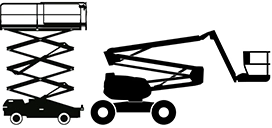
Electrically powered equipment is well suited for this: electric scissor lifts cover 6.30 to 33.00 m working height and, depending on the model, carry up to 1,000 kg, which includes tools and spare parts in the basket. For work above finished floors and in narrow aisles between installations, mast lifts with 10.00 to 12.65 m working height and 200 kg basket capacity are the gentler option. Where tall storage areas must be reached over racking aisles, high-rack scissor lifts from 18.50 to 33.00 m come into consideration. Before booking, you should clarify access widths and door heights, the load-bearing capacity of the floor including drains and channels, the permitted cleanliness of the machine, and whether the cold storage or maturing area has temperature and humidity conditions that impose restrictions on the equipment and the operator. Coordinating this with operations and quality management regularly needs more lead time than providing the equipment itself.
Growth Region Gruyere: New-Build Construction on the Outskirts
The second strand is classic building construction. Population growth is bringing new residential developments, schools and administrative buildings, and commercial and logistics space to the area around Bulle — mostly on open sites, with room for setup and outriggers, but with ground conditions that change during the construction phase.
On paved surfaces, diesel scissor lifts from 9.70 to 34.00 m working height and up to 1,134 kg basket capacity are the obvious choice for facade work, installation and roof-edge work. If the basket needs to be guided over canopies, scaffolding or neighbouring building elements, articulated boom lifts up to 48.15 m are the more flexible solution; for tall, free-standing elements, telescopic boom lifts up to 56.90 m are available. In the later fit-out stage, once flooring and windows are in place, demand typically shifts back to electric equipment. One point that is often underestimated on new-build sites: the ground changes several times over the course of construction — the assessment of the standing surface applies not to the whole construction period but to the day of use.
The Rental Fleet in Figures
| Category | Working Height | Basket Load |
|---|---|---|
| Electric Scissor Lifts | 6.30 – 33.00 m | 227 – 1,000 kg |
| Diesel Scissor Lifts | 9.70 – 34.00 m | 363 – 1,134 kg |
| High-Rack Scissor Lifts | 18.50 – 33.00 m | 450 – 1,000 kg |
| Articulated Boom Lifts | 10.89 – 48.15 m | 150 – 450 kg |
| Telescopic Boom Lifts | 14.00 – 56.90 m | 227 – 454 kg |
| Mast Lifts | 10.00 – 12.65 m | 200 kg |
| Spider Lifts | 13.00 – 39.50 m | 200 – 400 kg |
Handling and Earthworks: Telehandlers, Excavators, Forklifts
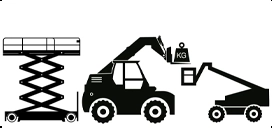
Between ramp, warehouse and construction site, telehandlers handle the flow of materials: fixed-boom machines with 4.30 to 18.80 m lift height and 1.25 to 25 t capacity, and rotating models with 15.42 to 38.90 m and 4 to 8 t for loads that need to be placed over a roof or an excavation pit. For use inside enclosed halls and near sensitive areas, electric telehandlers from 5.85 to 30.00 m are available.
Excavators are available from 1.8 to 30 t operating weight — the lighter classes for utility lines, connections and surrounding groundwork, the heavier ones for excavation and demolition. In warehouses and at loading bays, electric forklifts work where exhaust emissions are not permitted; counterbalance forklifts cover 3 to 16 t, and high-lift stackers cover 2.70 to 5.50 m lift height with 1.2 to 2.0 t capacity. For loads that need to be placed precisely behind a building or in an interior area, a mini crane is often the only machine that fits through the access route.
What the Renter Is Responsible For — and What We Provide
Work in the canton of Fribourg is subject to Swiss occupational health and safety law. The Ordinance on the Prevention of Accidents and Occupational Diseases (VUV) sets out the operator's duties, SUVA is responsible for implementation and supervision, and the EKAS guidelines set them out in more detail; the Labour Act and its associated ordinances form the framework. SN EN 280 is the relevant standard for inspecting mobile elevating work platforms.
Luibl provides the inspection certificate, CE documentation and operating instructions. The renter remains responsible for the risk assessment for the specific job, choosing the setup location, briefing the operator, and carrying out the visual and functional check before work begins. In processing plants, the company's own hygiene and access rules also apply: they determine when and in what condition a machine may enter a production area, and they exist alongside, not instead of, occupational safety obligations. Wind limits for outdoor work and permissible inclines are equipment-specific and documented in the operating instructions for the respective machine.
Transport to Bulle
Bulle has good transport links between the Swiss Plateau and the Pre-Alps; the town's commercial zones, the new-build areas on its outskirts, and the surrounding communities of the Gruyere district are all easily accessible. For access to processing plants, we need advance details on door height, ramp layout and the route within the facility; for new-build sites, the load-bearing capacity of the site road, turning space and the planned unloading point are decisive. For projects further west, for example around Lausanne, we coordinate transport and scheduling separately. Send us the working height, basket load, ground conditions, drive type and time period — this is usually enough to determine the right machine without further questions.
Frequently Asked Questions
Which aerial work platform is permitted in a food processing plant in Bulle?
This is decided by the plant based on its hygiene and access rules. Electrically powered equipment without exhaust emissions, with non-marking tyres and in a cleaned condition, is the usual choice. Electric scissor lifts from 6.30 to 33.00 m and mast lifts up to 12.65 m cover most cases. Clarify cleaning requirements, the access route within the plant, and the exact time of the shutdown in advance.
How do you plan maintenance work during a cleaning shutdown?
Work backwards from the production schedule. First establish when the line stops and when it must run again; this determines the machine's entry and exit times, the available working time and the required working height. Book the equipment for this period well in advance and define who releases the area and accompanies the route within the plant.
Can aerial work platforms be used in cold storage and maturing areas?
In principle, yes, but the area dictates the conditions. You need to check the temperature and humidity in the room, door openings and clearance heights, the floor condition including channels and drains, and the permitted duration of stay for the operator. The operating conditions that apply to the machine itself are model-specific and can be found in the operating instructions.
Which machine is suited to a new-build site on the outskirts of Bulle?
On paved, load-bearing ground, diesel scissor lifts from 9.70 to 34.00 m with up to 1,134 kg basket capacity are economical. If canopies, scaffolding or neighbouring building elements need to be cleared, articulated boom lifts up to 48.15 m are the better choice; for tall, free-standing elements, telescopic boom lifts up to 56.90 m are available. Assess the standing surface for the day of use, not for the whole construction period.
Can a telehandler replace a crane on a construction site?
In many cases, yes. A rotating telehandler with 15.42 to 38.90 m lift height and 4 to 8 t capacity can place loads over obstacles without needing to be repositioned — saving space and setup time. For very tight access routes or inner courtyards, the mini crane remains the alternative. The decision depends on load, reach and available standing area.
Which design suits your job? The overview Rent a lifting platform – all platform types at a glance explains scissor lifts, articulating and telescopic boom lifts, mast, spider and truck-mounted lifts and shows what the rental price depends on.