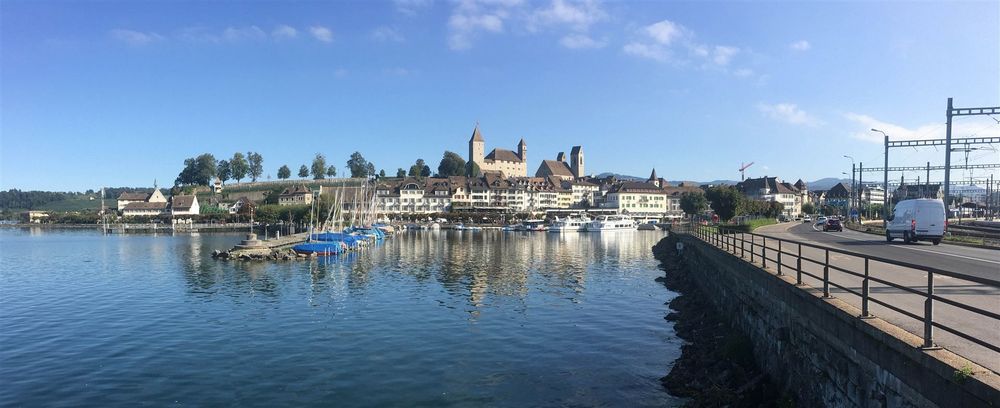
Aerial Work Platforms and Construction Machinery for Rent in Rapperswil-Jona
Anyone renting aerial work platforms and construction machinery in Rapperswil-Jona is often building in a location shaped by open water. The Seedamm causeway across the upper Lake Zurich, the shoreline and harbour facilities, jetties and promenades bring boundary conditions you simply won't find ten kilometres inland: limited-capacity set-up areas, embankments, berms and wind that hits unchecked across the open lake surface. Inland, the picture is shaped by university campus buildings, commercial premises and a strong timber construction sector. For both situations, Luibl supplies inspected rental equipment, delivered to the site on the upper Lake Zurich with our own low-loader.
Building On and Over the Water: Seedamm, Shoreline and Jetties
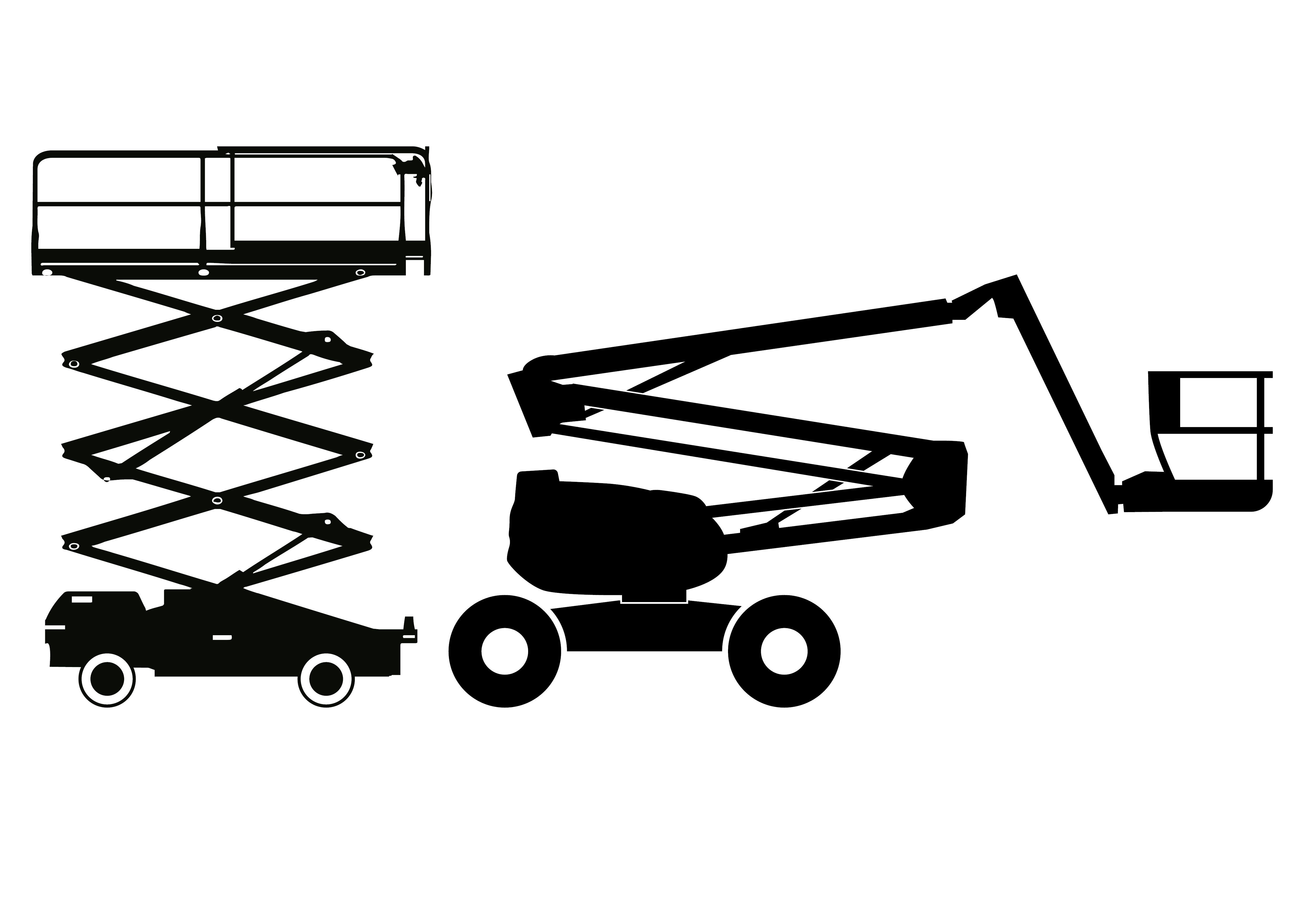
Waterfront work has a basic problem: the work point is out in front of the machine, not underneath it. Railings, jetty heads, embankment slopes, lighting masts on promenades and the undersides of bridges are all reached via outreach. Telescopic booms with 14.00 to 56.90 m working height and 227 to 454 kg platform capacity cover this reach; where obstacles such as a railing, a row of trees or a utility pole need to be worked around, the articulated telescopic boom with 10.89 to 48.15 m is the better-suited machine.
But the decisive factor is ground bearing capacity. Embankment crests, made-up shorelines, gravel berms and path edges rarely carry as much as a spec sheet assumes. That's why track-mounted aerial platforms with 13.00 to 39.50 m working height and 200 to 400 kg platform capacity are the first choice here: they spread the load over a wide area, cross gravel and turf grids, and stabilise on a small footprint. Support plates under every outrigger are mandatory, as is clarifying in advance how close to the top edge of the embankment the machine may even be positioned.
The second factor over open water is wind. Every platform has a maximum permissible wind speed set by the manufacturer; over the open lake surface this limit is reached faster than in a built-up area, and gusts arrive with no shielding at all. Plan facade and height work on the Seedamm with a safety margin, check the weather forecast before starting work, and agree in advance who has the authority to stop work. For work over or alongside the causeway's traffic lanes, coordination with the road authority is also required; the machine should be in position before the agreed time window.
Campus and Timber Construction: Assembling Large-Format Elements
Inland, the task shifts. University and campus buildings bring classic indoor work — lecture halls, laboratories, workshops, libraries — with services running under the ceiling and operations that continue as normal. For this, electric scissor lifts from 6.30 m working height are the standard machine: zero local emissions, non-marking tyres, and quiet enough for an occupied building. In narrow access corridors and plant rooms, a mast lift with 10.00 to 12.65 m and 200 kg platform capacity takes over, since it fits through standard doorways.
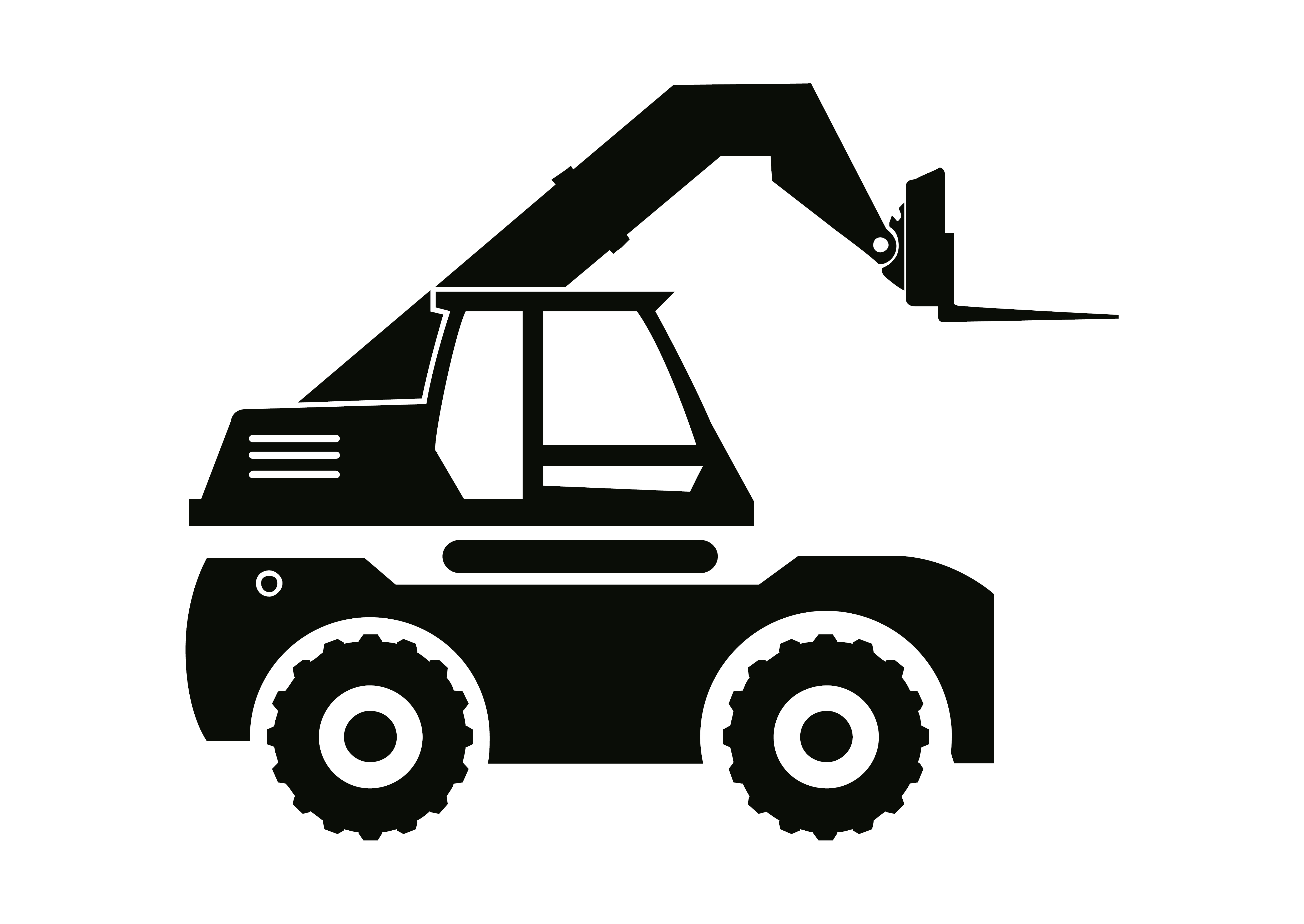
The region's timber construction sector works differently: elements are prefabricated and then assembled. Wall and floor elements, roof trusses and roof cassettes arrive on site in large formats and have to be lifted, aligned and connected in place. The clean way to split the work is one machine for the load and one for the person: a rotating telehandler with 15.42 to 38.90 m lifting height and 4 to 8 t load capacity guides the element into place, while the fitters work at the connection point from an articulated telescopic boom or scissor lift. This is faster and safer than trying to solve both tasks with a single machine — and it keeps the platform clear of the load.
The Rental Fleet at a Glance
| Class | Working height | Platform capacity |
|---|---|---|
| Scissor lifts, electric | 6.30 – 33.00 m | 227 – 1,000 kg |
| Scissor lifts, diesel | 9.70 – 34.00 m | 363 – 1,134 kg |
| High-bay scissor lifts | 18.50 – 33.00 m | 450 – 1,000 kg |
| Articulated telescopic booms | 10.89 – 48.15 m | 150 – 450 kg |
| Telescopic booms | 14.00 – 56.90 m | 227 – 454 kg |
| Mast lifts | 10.00 – 12.65 m | 200 kg |
| Track-mounted aerial platforms | 13.00 – 39.50 m | 200 – 400 kg |
Telehandlers, Excavators and Forklifts on the Upper Lake Zurich
Beyond timber construction, the equipment fleet covers the region's usual tasks. Telehandlers in fixed configuration range from 4.30 to 18.80 m lifting height at 1.25 to 25 t load capacity and handle delivery, repositioning and loading on site; for warehouses and enclosed areas, electric telehandlers with 5.85 to 30.00 m and 2.5 to 7 t are available.
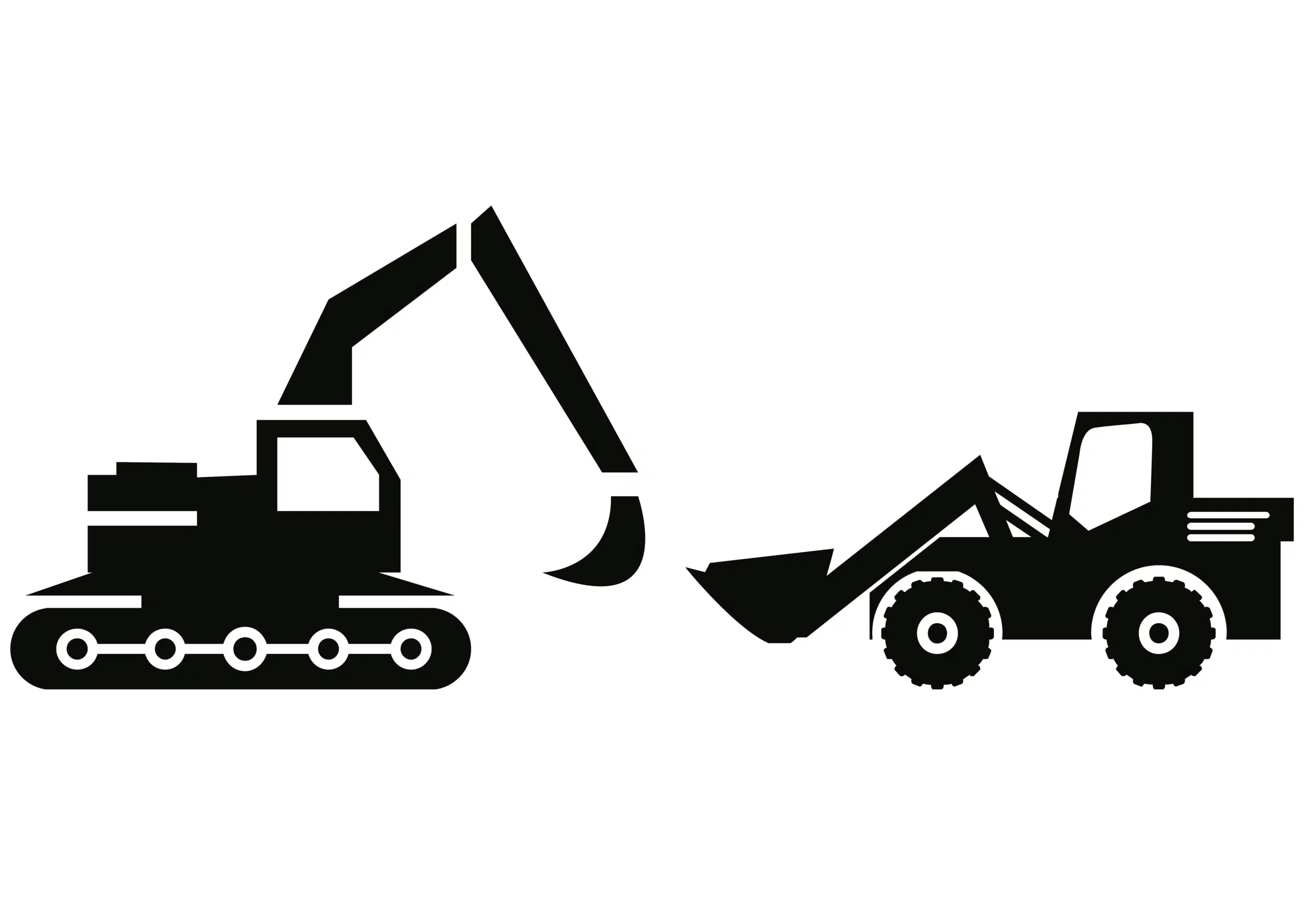
In civil engineering — shoreline reinforcement, utility lines, foundations, outdoor facilities — excavators from 1.8 to 30 t operating weight are at work. The smaller classes fit narrow shoreline paths and gaps in existing development, while the larger classes handle excavation and ground improvement. In warehousing and production facilities, forklifts from 3 to 16 t and order pickers with 2.70 to 5.50 m lifting height and 1.2 to 2.0 t load capacity round out the fleet; overhead services in high-bay racking are reached with high-bay scissor lifts from 18.50 to 33.00 m.
Inspection Certificates and Responsibility for Outdoor Deployments
The more exposed the site, the more precisely responsibility has to be clarified — on the Seedamm that matters more than in any indoor hall. In Rapperswil-Jona, the legal basis is the Accident and Occupational Disease Prevention Ordinance (VUV); implementation and oversight lie with SUVA, the EKAS guidelines specify the requirements in detail, and above these stand the Labour Act and its ordinances. Mobile elevating work platforms are subject to recurring inspection under SN EN 280. Luibl supplies a valid inspection certificate, CE documentation and the operating manual for every machine, which also states the permissible wind speed. The hirer remains responsible for the site-specific risk assessment — here including ground conditions, proximity to embankments and wind exposure —, operator training, and the visual and functional check before work begins.
Delivery to Rapperswil-Jona
We organise delivery from Passau with our own low-loader; the route to the upper Lake Zurich runs via the eastern Swiss motorway axes and is fully passable for heavy equipment. The final stretch requires attention: shoreline paths, promenades and access roads to the harbour facilities sometimes have weight and width restrictions, and on the Seedamm the stopping point has to be coordinated with the road authority. When you send your enquiry, tell us the intended set-up location, the surface underneath it, and any access restrictions you are aware of. For projects with multiple machines, we coordinate scheduling with our locations in Zurich and St. Gallen.
Frequently Asked Questions
Which aerial platform can be set up on an embankment crest or a shoreline path?
In most cases, a track-mounted aerial platform with 13.00 to 39.50 m working height. Its undercarriage spreads the load over a wide area, it can travel over gravel, turf grids and soft berms, and it stabilises on a small footprint. Support plates under every outrigger are mandatory. Also clarify with the site management how close to the top edge of the embankment the machine may be positioned — this limit depends on the site and cannot be derived from the equipment spec sheet.
What needs to be considered for wind over the open lake surface?
Every platform has a maximum permissible wind speed set by the manufacturer; the figure is stated in the operating manual we supply. Over the upper Lake Zurich, this value is reached faster than in a built-up area, because the open surface offers no shielding and gusts arrive unchecked. Check the weather forecast before starting work, build a safety margin into your schedule, and agree in advance who has the authority to stop work.
How do a platform and a telehandler work together when assembling timber elements?
By dividing the work. The rotating telehandler with 15.42 to 38.90 m lifting height and 4 to 8 t load capacity guides and holds the element, while the fitters work at the connection point from an articulated telescopic boom or scissor lift. This keeps the platform clear of the load and lets both machines work within their designed range. It's important to plan the set-up locations and swing ranges of both machines in advance so they don't block each other.
Can I reach the underside of a jetty or a bridge with an aerial platform?
Often yes, if the adjacent set-up area is load-bearing. What matters is the outreach, not the working height. Articulated telescopic booms guide the platform around the structure, while telescopic booms use pure reach to get to more distant points. Send us a photo showing the distance from the possible set-up point to the work point, and we'll determine the right equipment class.
Does Luibl also deliver to the surrounding municipalities on the upper Lake Zurich?
Yes, the whole region is served — Rapperswil-Jona as well as the neighbouring municipalities around the Obersee and in the March district. Delivery is carried out with our own low-loader; we schedule dates around your construction programme. For larger projects with several equipment classes, early reservation is recommended so that all machines remain booked for the full duration of the works.
Which design suits your job? The overview Rent a lifting platform – all platform types at a glance explains scissor lifts, articulating and telescopic boom lifts, mast, spider and truck-mounted lifts and shows what the rental price depends on.