Inspection of Work Platforms: Intervals and Check Points
Inspection Duty for Work Platforms: Legal Bases
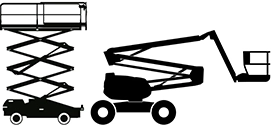
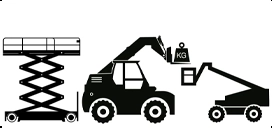
Mobile elevating work platforms — whether scissor lift, articulating boom lift, truck-mounted platform, spider lift or trailer-mounted platform — count as work equipment for height access and are subject to the maintenance and checking duty under the VUV. This applies to every platform type — regardless of whether the equipment is owned or rented.
This guide explains what operators of mobile elevating work platforms specifically have to have inspected, which points are checked, and how the pre-use check and the periodic inspection are to be distinguished.
A note on scope: the term "UVV inspection" and DGUV Rule 100-500 come from German law and do not apply in Switzerland. Nor is there a statutory annual interval here — anyone adopting German inspection plans must convert them to the VUV, EKAS 6512 and the SN standards.
The inspection duty follows from:
- VUV Art. 32b: maintenance of work equipment and its checking
- VUV Art. 3–6: employer duties, instruction of employees
- EKAS Guideline 6512: requirements for inspection, maintenance and specialists; requires a planned and documented maintenance plan
- SN EN 280: the safety standard for mobile elevating work platforms — safety requirements and design specifications
- Fall-arrest PPE: where work is carried out using personal fall protection equipment, supplementary requirements apply to the anchor points (SN EN 795)
Intervals: How Often Must a Work Platform Be Inspected?
There is no fixed statutory annual interval. The manufacturer's specifications and the hazard assessment are decisive; in practice an annual cycle has become established. Shorter intervals are indicated where there is:
- intensive use (multi-shift operation, permanent stationing on a site)
- use in corrosive, damp or dusty environments
- specific manufacturer requirements
- an accident, overload or identified defects (extraordinary check)
EKAS Guideline 6512 requires the chosen interval to be set, justified and documented in the maintenance plan.
Checks before work begins are not periodic inspections — they are a separate ongoing operator duty carried out by the operator.
Pre-Use Check vs. Periodic Inspection
This distinction is decisive in practice:
| Check before work begins | Periodic inspection | |
|---|---|---|
| Who carries it out | Operator before every shift | Specialist under EKAS 6512 |
| Legal basis | VUV, operating manual | VUV Art. 32b, EKAS 6512, SN EN 280 |
| Scope | Visual check, short functional test | Full visual, functional and where applicable load testing |
| Documentation | Shift record (recommended) | Inspection report + marking (mandatory) |
| Interval | Before every shift of use | Per the maintenance plan, usually annually |
Checklist for the check before work begins (not a periodic inspection; guidance for operators):
- Visual inspection for external damage, leaks, damaged lines
- Check of all emergency lowering / emergency descent devices
- Functional test of the travel movements (raised and lowered) with the machine safely set up
- Read the inspection marking — is the last check still valid?
- Check the ground before driving on
Check Points in Detail
Hoisting gear and hydraulics
- Hydraulic cylinders of all lifting stages for leaks and tightness
- Hydraulic lines, hoses and connections
- Lifting speed and synchronised movement (scissor lifts)
- Overload protection and tilt limiter
Emergency lowering and safety devices
- Emergency lowering / descent system for function (from the ground and from the platform controls)
- Tilt and overload monitors
- Dead-man switch and safety cut-outs
- Tip-over and buckling protection (articulating boom lifts)
Basket, guardrails and anchor points
- Work basket for structural integrity, welds, tip-over protection
- Fall protection: guardrail, intermediate rail, toe board
- Anchor points for fall-arrest PPE (certified to SN EN 795, load capacity)
- Basket levelling and basket extension (on telescopic and articulated equipment)
Documentation
- Inspection report with all inspection positions and findings
- Entry in the control log and maintenance plan
- Marking with the date of the next check due; records to be produced to the supervisory bodies on request
Who May Inspect Work Platforms?
The periodic inspection must be carried out by a specialist within the meaning of EKAS Guideline 6512, with the relevant qualification for mobile elevating work platforms:
- Relevant vocational training (for example automation technician, polymechanic, agricultural machinery mechanic)
- Experience in the field of mobile elevating work platforms
- Current professional activity with this type of work equipment
A recognised inspection body is not required for work platforms — unlike for cranes under the Crane Ordinance.
Luibl Rental does not offer inspection services to third parties. For external, recognised inspectors, please approach accredited inspection bodies; Suva additionally provides information sheets and checklists. Further reading: Who may carry out the inspection? →
Platform Types and Their Particularities
Every type of mobile elevating work platform has particularities relevant to inspection:
- Scissor lifts: scissor mechanism, slide guides, synchronised movement of the scissors
- Articulating boom lifts: buckling protection, all extension stages, basket levelling
- Truck-mounted platforms: additionally the vehicle tyres, outriggers and steering (chassis); the chassis is additionally subject to the roadworthiness test under the SVG/VTS
- Spider lifts: track drive, contact area, terrain compensation
- Trailer-mounted platforms: stabilisers, coupling and lighting system as vehicle equipment
Renting Inspected Work Platforms from Luibl
All mobile elevating work platforms from the Luibl rental fleet are delivered with a valid inspection record. As the hirer you carry no responsibility for the periodic inspection — that rests with Luibl Rental.
As operator, the ongoing duties remain with you: checks before use, safe set-up and the instruction of operators under Art. 6 VUV.
Our own low-loader fleet secures delivery throughout Switzerland and across Europe of every platform category — scissor lift, articulating boom lift, truck-mounted platform, spider lift or trailer-mounted platform — directly to your site. For equipment specifications and availability: Rent aerial work platforms →
On operator authorisation, Luibl provides non-binding information on external, recognised training providers. Operator authorisation explained →
Frequently Asked Questions
How often must a work platform be inspected?
There is no statutory annual interval. The manufacturer's specifications and the hazard assessment are decisive; in practice an annual cycle is customary. What is decisive is an interval set, justified and documented in the maintenance plan.
Does DGUV Rule 100-500 apply in Switzerland?
No. DGUV Rule 100-500 is German law. In Switzerland, VUV Art. 32b and EKAS Guideline 6512 apply, with SN EN 280 as the standard. The technical scope of inspection is comparable; the logic of intervals is not.
What is inspected on a work platform?
The hoisting gear and hydraulics, emergency lowering and safety devices, the basket with guardrails and anchor points for fall-arrest PPE, the undercarriage and outriggers, and all platform-specific safety functions. Result: an inspection report and marking.
Must the operator check the platform daily?
Yes — but that is not a periodic inspection; it is a check before work begins. The operator carries out a short visual and functional check before every shift. The periodic inspection by a specialist does not replace this check, and vice versa.
Are Luibl rental work platforms inspected?
Yes. All rental platforms are delivered with a valid inspection record. The periodic inspection is the task of Luibl Rental as lessor; instructing the operators under Art. 6 VUV remains with you.