Operator Authorisation: Who May Operate an Aerial Work Platform?
Short Answer: Do You Need a "Work Platform Licence"?
The term "work platform licence" is in common use — but legally there is no state-issued licence for aerial work platforms in Switzerland. What does exist is a training and instruction duty, without which no operator may put an elevating work platform into service.
An important distinction: unlike for cranes — for which the Crane Ordinance requires an officially regulated crane operator's licence — and unlike for forklifts, for which EKAS Guideline 6518 provides for the forklift driving permit, there is no separate statutory licence for mobile elevating work platforms. What is decisive here:
- Demonstrated training of the operator through recognised training (for example the IPAF/PAL Card or equivalent)
- Instruction under Art. 6 VUV by the employer — documented, not merely verbal
- Equipment-specific instruction before each new machine
For anyone using German documentation: the DGUV Principle 308-008 central there is German law and does not apply in Switzerland. The substantive training requirements are comparable; the legal basis is not.
Legal Framework: the VUV, EKAS and Employer Duties
The central basis is formed by the Accident Insurance Act and the VUV. The essential points:
- Art. 6 VUV — instruction: the employer must ensure that employees are informed about the hazards and guided in the measures to prevent them; the instruction must be documented
- Art. 8 VUV — work involving particular hazards: may be assigned only to persons trained for it
- EKAS Guideline 6512 — work equipment: requirements for use, maintenance and qualification
- Equipment-specific instruction: required before first use on a new or unfamiliar machine
- Minimum age: as a rule 18 years; in an apprenticeship context the requirements of ArGV 5 apply
In addition, Suva provides information sheets and checklists on lifting platforms; supervision is exercised by Suva, SECO and the cantonal labour inspectorates.
Routes to Operator Authorisation
Training with external providers
The classic route: recognised training with an external training provider. Content:
- Fundamentals of occupational safety (fall protection, fall-arrest PPE)
- Physics and stability of elevating work platforms
- Legal bases (VUV, EKAS guidelines)
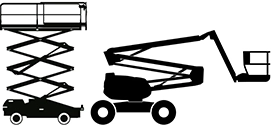
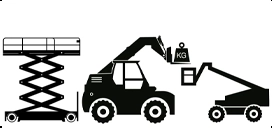
- Platform types and how they differ
- Practical exercises on the machine
Training is offered by ASFL SVBL, the Swiss Safety Center, TUEV, manufacturer training centres and IPAF training centres, among others. Luibl Rental does not offer training. For recognised providers in your region, enquire with Suva or directly with IPAF.
IPAF training and the PAL Card
IPAF (the International Powered Access Federation) offers an internationally recognised certificate: the PAL Card (Powered Access Licence). The training is practice-oriented, specific to machine classes, and available at IPAF-certified training centres — including in Switzerland.
The PAL Card is recognised across the industry and documents the training verifiably. Companies operating internationally prefer it because it is valid across borders. It does not, however, replace the in-company instruction under Art. 6 VUV.
Instruction and assignment by the employer
Training alone is not enough. The employer must instruct the operator under Art. 6 VUV and document that instruction — stating the person, the platform types permitted and any further restrictions. Without this step, the basis for deployment is missing.
What Does the Training Cost, and How Long Does It Take?
Costs and duration depend on the provider, the platform class and the scope (theory and/or practice). Typical market ranges:
- One-day training (theory + practice, 1 class): approx. €200–450 per participant
- Extended training (several classes / platform types): approx. €350–700 per participant
- IPAF training (PAL Card): approx. €250–550 depending on class and location
Group discounts are customary. These figures are guide values — obtain quotes from recognised training providers.
How Long Is the Training Valid?
There is no statutory expiry date for the training itself. What is decisive is the instruction under Art. 6 VUV: it must be given when the activity is taken up, when the work process changes, and thereafter at appropriate intervals — in practice annually, as recommended by Suva. Without current instruction, the basis for deployment falls away.
The IPAF PAL Card has a fixed validity of 5 years and must then be renewed through refresher training.
Instruction at Rental Handover: What Luibl Provides — and What It Does Not
When handing over rental work platforms, Luibl Rental provides equipment-specific instruction: operator controls, safety devices, emergency lowering, site particularities and machine-typical guidance — relating to the specific machine hired.
This instruction is not training and does not replace recognised training. Nor does it replace the instruction under Art. 6 VUV — that remains the employer's responsibility. Anyone without training may not operate the platform independently after the instruction.
Special Case: Personnel Basket on a Telehandler
Using a personnel basket on a telehandler brings particular requirements: alongside platform training, knowledge of telehandler operation and of the specific risks of basket use must be demonstrated. Note additionally that operating forklifts — and therefore telehandlers — requires the forklift driving permit under EKAS Guideline 6518. Details: Telehandlers with a personnel basket →
Rent aerial work platforms throughout Switzerland and across Europe → | Send an enquiry →
For information on external providers: Training / information →
Frequently Asked Questions
Is a "work platform licence" mandatory in Switzerland?
There is no state-issued licence for elevating work platforms — unlike for cranes (crane operator's licence under the Crane Ordinance) and forklifts (forklift driving permit under EKAS 6518). What is required, however, is demonstrated training and documented instruction under Art. 6 VUV.
Does DGUV Principle 308-008 apply in Switzerland?
No. DGUV Principle 308-008 is German law. In Switzerland the duties follow from the VUV and the EKAS guidelines. The substantive training requirements are comparable; the legal basis differs.
What does the training cost?
Depending on provider, platform class and scope: approx. €200–700 per participant. One-day training with theory and practice for one class from approx. €200. IPAF training (PAL Card) from approx. €250. Luibl Rental does not offer training.
How long is the PAL Card valid?
The IPAF PAL Card is valid for 5 years and must be renewed through refresher training. There is no statutory expiry date for the training itself; instruction under Art. 6 VUV must, however, be repeated regularly.
Is the lessor's instruction enough to operate an aerial work platform?
No. The equipment-specific instruction at rental handover supplements the training for the specific rental machine — it replaces neither the training nor the instruction under Art. 6 VUV.