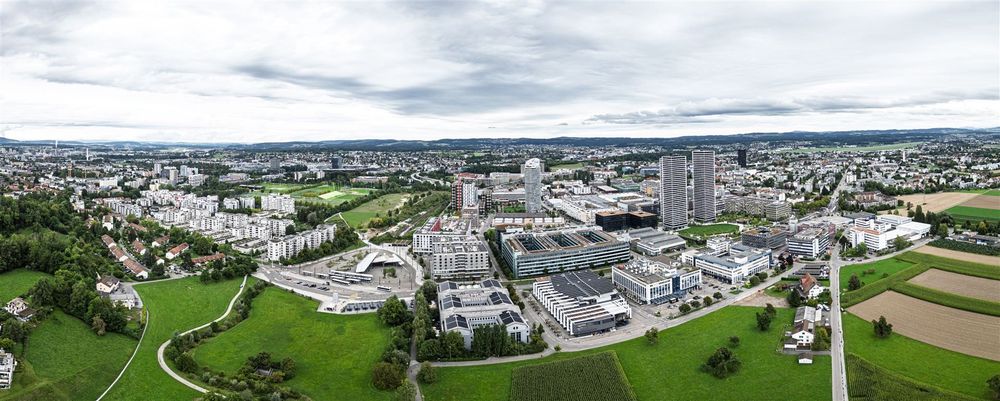
Rent Aerial Work Platforms and Construction Machinery in Duebendorf
Renting aerial work platforms and construction machinery in Duebendorf usually means working inside a building that follows different rules than an ordinary construction site. On the airfield grounds and around the innovation and research park, laboratory, pilot-plant and university buildings stand alongside halls with very wide spans, interspersed with the commercial areas of the Glattal. Sometimes cleanliness determines the choice of equipment, sometimes it's the eaves height. Luibl provides tested rental machines for both — from the compact electric unit for the clean room to the platform that reaches under a hangar roof — and delivers to the site with its own low-loader.
Laboratory and Research Buildings: Working Under Access and Cleanliness Requirements
In laboratory, testing and pilot-plant areas, the platform is a foreign body that has to fit in. Three things are practically always required: no exhaust emissions, no marking tyres, no oil dripping onto the floor. That's why electric scissor lifts are the standard equipment — locally emission-free, from 6.30 m working height, and therefore usable even in rooms with suspended ceilings. The work itself is almost always overhead: ventilation ducts, service runs for gases and purified water, cable trays, extraction connections, lighting above work islands.
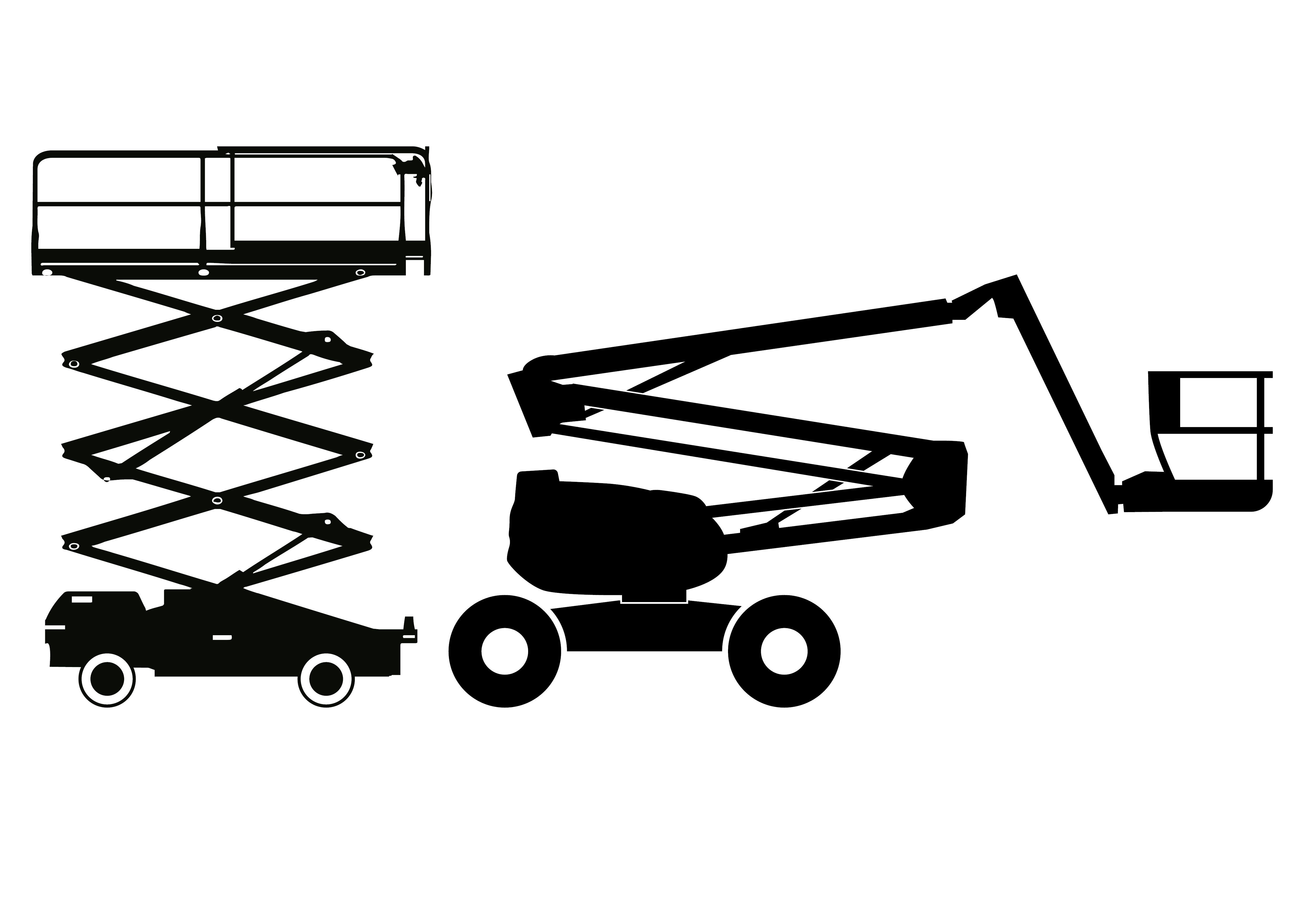
Where these runs pass over fixed installations — laboratory benches, safety cabinets, test rigs — a straight lifting motion won't get you to the work point. In that case, an articulated boom lift guides the basket past the obstruction; in electric versions it reaches 10.89 to 28.00 m at 150 to 280 kg basket load. For individual points in narrow corridors and plant rooms, a mast lift with 10.00 to 12.65 m and 200 kg is often enough — it fits through standard doors and can be repositioned by a single person.
Organisationally: clarify access, decontamination procedures and equipment cleaning before delivery. It is common to clean the tyres before entering, tape off transitions, and have a fixed contact person on the operator's side who releases the area. We deliver the equipment cleaned and document its condition at handover, so that approval doesn't fail on a formality.
Hangar and Hall Buildings on the Airfield Grounds: Wide Spans, High Eaves
The second focus in Duebendorf is, quite literally, higher up. Hangars and halls with widely spanned truss roofs have hardly any intermediate supports — the work point is high up and often far from any wall. This is exactly what diesel-powered articulated boom lifts are designed for: 11.91 to 48.15 m working height at 227 to 450 kg basket load, with an outreach that brings the basket right into the middle of the bay between two trusses. Typical tasks include corrosion protection on steel components, installation and maintenance of door drives, hall lighting, fire detection systems and suspensions for crane systems.
For area work under the roof — cleaning, painting, general overhaul — scissor lifts are the more efficient choice, because the large platform carries more material and more people: up to 33.00 m in electric, up to 34.00 m in diesel versions with up to 1,134 kg basket load. For work on the building envelope, eaves edge and roof edge, choose telescopic boom lifts with 14.00 to 56.90 m. If the equipment stands on unpaved apron areas or grass paver blocks, tracked lifts with 13.00 to 39.50 m are the gentler option, as they distribute their weight across the track surface.
The Rental Fleet at a Glance
| Class | Working Height | Basket Load |
|---|---|---|
| Scissor Lifts Electric | 6.30 – 33.00 m | 227 – 1,000 kg |
| Scissor Lifts Diesel | 9.70 – 34.00 m | 363 – 1,134 kg |
| High-Bay Scissor Lifts | 18.50 – 33.00 m | 450 – 1,000 kg |
| Articulated Boom Lifts | 10.89 – 48.15 m | 150 – 450 kg |
| Telescopic Boom Lifts | 14.00 – 56.90 m | 227 – 454 kg |
| Mast Lifts | 10.00 – 12.65 m | 200 kg |
| Tracked Lifts | 13.00 – 39.50 m | 200 – 400 kg |
Telehandlers, Excavators and Forklifts in the Glattal
Research and hall buildings come with heavy, bulky equipment — test rigs, air-conditioning units, transformers, ventilation plants. Telehandlers take over the placement work where a crane would be disproportionate: rigid models with 4.30 to 18.80 m lift height and 1.25 to 25 t load capacity, or as rotating machines with 15.42 to 38.90 m and 4 to 8 t when working over a roof or an adjoining row of buildings. Inside a clean hall, electric telehandlers with 5.85 to 30.00 m and 2.5 to 7 t work with zero local emissions.
For site development, utility lines and foundations in the Glattal, excavators from 1.8 to 30 t operating weight are available; the smaller classes are suitable for excavation work between existing service runs, where every centimetre counts. In building operations, forklifts from 3 to 16 t and high-lift stackers with 2.70 to 5.50 m lift height and 1.2 to 2.0 t load capacity round out the fleet — for example, when laboratory equipment needs to be temporarily stored and reinstalled during a renovation.
Documentation, Approval and Operator Obligations
In research facilities, the operator checks more thoroughly than elsewhere before third-party equipment is allowed in — documentation is part of the access process here. Swiss law is decisive: the Ordinance on the Prevention of Accidents and Occupational Diseases (VUV) sets the framework, SUVA implements and supervises it, and the EKAS guidelines provide the details; above these stand the Labour Act and its ordinances. Mobile elevating work platforms are subject to recurring inspection under SN EN 280. For every rental unit you receive the valid inspection certificate, CE documentation and operating instructions; as a rule, this is sufficient for approval by the building's technical management. What remains with the tenant: the risk assessment for the specific room, operator training, and the visual and functional check before every start of work.
Transport to Duebendorf
Delivery to the Glattal itself is straightforward; the last fifty metres often are not. What matters is door height and width, the load-bearing capacity of floors above basement levels, and whether the equipment can reach its place via a ramp, an airlock or a goods lift. Give us these figures with your enquiry, and we'll clarify in advance whether one machine fits or whether two smaller units are the better solution. On the airfield grounds, we schedule delivery around the site's access and operating hours. For larger projects, we coordinate with our locations in Zurich and Winterthur, so that several classes remain available in parallel.
Frequently Asked Questions
Which aerial work platform is allowed into a laboratory or clean room area in Duebendorf?
In practice, an electric unit with non-marking tyres and a clean chassis — usually an electric scissor lift, or an electric articulated boom lift where there are obstructions. We deliver the equipment cleaned and document its condition at handover. The specific requirements are set by the operator: clarify decontamination, cleaning steps and approval before the delivery date, so the equipment doesn't end up stuck at the gate.
How do I reach ventilation and service runs that pass over fixed laboratory benches?
With an articulated boom lift. Its basket is guided past the installation to the work point instead of stopping vertically in front of it. Electric versions offer 10.89 to 28.00 m working height at 150 to 280 kg basket load. Check the free setup area in front of the laboratory bench and the permissible floor load in advance — both limit the machine size more than the ceiling height does.
Which machine works under a widely spanned hangar roof?
For point work in the middle of a truss bay, a diesel articulated boom lift with 11.91 to 48.15 m working height and 227 to 450 kg basket load. For area work under the roof, a scissor lift is more economical, since the larger platform carries more material and more people. The decisive factors are eaves height, the horizontal distance to the nearest drivable point, and the floor load capacity of the hall area.
Can I work indoors and outdoors in Duebendorf with the same machine?
Rarely a good idea. Indoor areas require electric drive and clean tyres, while outdoor areas often call for diesel or tracked chassis because of the ground and gradient. We recommend scheduling two machines for mixed projects rather than overstretching one machine for both tasks. With parallel use, the rental periods of the two machines can be set independently.
What documentation do I receive with the rental equipment?
Every machine comes with a valid inspection certificate under SN EN 280, CE documentation and the operating instructions. These let you demonstrate to the building's technical management and site management that the equipment is inspection-compliant. Not included are the site-specific risk assessment and operator training — under VUV, these remain the tenant's responsibility. Equipment familiarisation at handover is possible by arrangement.
Working height, outreach and ground conditions determine the right machine. A comparison of all designs with costs and inspection duties is available at Rent a lifting platform: platform types, costs and applications.