Telehandler or Wheel Loader: The Practical Comparison
Short Answer: Loading or Lifting?
The rule of thumb first: if you mainly move and load bulk material, take the wheel loader. If you lift, stack and need height, take the telehandler.
It gets interesting in the grey zone in between — that is where breakout force, lift height and the question of whether one machine can handle both tasks make the difference. This comparison comes from the rental company, not the manufacturer: we recommend the wheel loader whenever it is the better choice.
The Machine Profiles
Wheel Loader: Breakout Force and Loading Cycle
The wheel loader is built around its bucket: articulated steering, a low centre of gravity and high breakout force for digging into stockpiles and compacted material. Its loading cycle — scoop, reverse, dump — is faster than that of any other machine. Its limit: lift height typically ends at 3 to 4 metres.
Telehandler: Height, Reach, Versatility
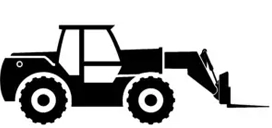
The telehandler lifts with its extendable boom — from 4 to 39 metres in the Luibl rental fleet — and places loads horizontally over obstacles. With a quick coupler it turns from a forklift into a bucket machine, a crane substitute or an aerial work platform. Its limit: bucket work does not match the breakout force and cycle time of a true wheel loader.
The Direct Comparison
| Criterion | Wheel loader | Telehandler |
|---|---|---|
| Core task | loading bulk material | lifting, stacking, reaching |
| Lift height | approx. 3–4 m | 4–39 m |
| Breakout force | very high | medium |
| Speed in the loading cycle | very fast | medium |
| Range of attachments | bucket, forks, a few others | forks, bucket, winch, basket and more |
| Loading over high edges (silo, high side wall) | limited | strong |
| Use as crane substitute or aerial work platform | no | yes (Roto) |
Four Typical Scenarios
Earthworks and material handling at the stockpile: wheel loader. Where bulk material moves into trucks and crushers all day long, breakout force and cycle time count — here it is unbeatable.
Building construction with material supply across storeys: telehandler. Pallets to the third floor, trusses onto the roof, skips over the edge — only the boom can do that.
Agriculture with mixed tasks: usually the telehandler. Stacking bales to six metres, filling the silo, pushing feed in between — with a bucket it also covers a large share of wheel loader tasks.
Landscaping with bulk material plus occasional lifting: it depends on the mix. If loading dominates, the compact wheel loader wins; if pallets and height dominate, the telehandler.
One Machine Instead of Two: Telehandler with Bucket
For projects with mixed requirements, the telehandler with a bucket attachment often replaces the second machine: one rental, one transport, one operator.
The limit lies with hard, compacted material and continuous loading operation — there the wheel loader remains the choice. For handling loose bulk material, backfilling and clearing, the combination is almost always sufficient in practice.
Cost Comparison in Brief
In comparable size classes, daily rental rates are close to each other. The telehandler saves money, however, whenever it replaces two machines: half the transport costs, one operator, one instruction appointment.
Specific rental prices by machine class: Renting a telehandler: costs.
Conclusion and Enquiry
Pure loading work → wheel loader, no discussion. Height, stacking, mixed tasks → telehandler, usually with a bucket in the package. If in doubt, a short conversation about material, heights and work rate decides — then the answer is clear within a few minutes.
Rent a telehandler → · Rent a wheel loader → · Send an enquiry →
Understanding Load Capacity: Load Chart Instead of Data Sheet Value
The most important difference between the two machines lies not in the maximum load capacity, but in how it changes.
With the wheel loader, the tipping load is largely constant: the bucket stays close to the vehicle and the centre of gravity hardly shifts forward when lifting. What it can pick up, it can also dump at full lift height.
With the telehandler, the permissible load falls with every metre of extension. A machine with a rated capacity of 4,000 kg carries only a fraction of that with the boom fully extended at a flat angle. The load chart in the cab shows the permissible load for every combination of boom angle and extension — reading it is part of the training, not an optional extra.
The practical consequence: anyone who wants to lift a pallet to 12 metres chooses the machine by the load at 12 metres, not by the rated capacity in the brochure.
Ground Pressure, Manoeuvrability and Space Requirements
Articulated steering versus all-wheel steering. The wheel loader articulates in the middle and so turns in the tightest of spaces, but has a wide rear swing. The telehandler usually runs with selectable steering: front axle, all-wheel or crab steering — the latter moves the machine sideways without turning, which is decisive in narrow lanes.
Ground pressure. Wheel loaders run on wide tyres and distribute their weight well; telehandlers are rear-heavy and put considerably more load on the front axle when lifting with the boom extended. On freshly backfilled or waterlogged ground, that is the difference between working and sinking in.
Height and width. For halls, the clearance height counts: because the boom sits to the side, telehandlers are often lower than a wheel loader of the same performance class — one reason why they are so widespread in stables and warehouses.
Visibility, Safety and Operating Comfort
Forward visibility. The side-mounted telescopic boom leaves the view of the load clear — on the wheel loader, the raised bucket regularly obscures exactly the area being driven into. For stacking work, that is a tangible advantage of the telehandler.
Rear visibility. Both machines have blind spots at the rear. A reversing camera and an instructed banksman are mandatory when working around pedestrian traffic, not a comfort feature.
Stability. The wheel loader practically only tips sideways on slopes; the telehandler tips forward when the load is exceeded — the longitudinal stability indicator warns of this and must be kept in view.
Qualification. For telehandlers, training is mandatory under VUV Art. 8 through external, recognised providers; for earthmoving machines such as the wheel loader, the relevant VUV provisions and SUVA guidelines for construction machine operators apply. Anyone who operates both machines needs both certificates.
Three Practical Cases Worked Through
Case 1 — gravel plant, continuous operation: loading material from the stockpile into trucks eight hours a day. Cycle time and breakout force are decisive; every second per loading cycle multiplies over the day. Wheel loader, no discussion. A telehandler would do the same job, but with considerably more time and higher wear on the telescopic mechanism.
Case 2 — farmyard conversion on an agricultural holding, three weeks: moving soil, spreading gravel, placing precast concrete elements, stacking timber to six metres. One machine has to do both. Telehandler with bucket in the package — loading is slower than with the wheel loader, but the second rental, the second transport and the second operator are no longer needed.
Case 3 — logistics hall, pallet handling via a ramp: pallets from the truck into the hall, partly onto racking levels up to five metres. No bulk material, limited clearance height. Telehandler, compact class — with forks the wheel loader can reach the pallets, but not the height and not over the side wall.
The pattern behind it: the wheel loader wins when one task fills the whole day. The telehandler wins as soon as several different tasks arise — or height comes into play. Rental prices for both classes: Renting a telehandler: costs.
Frequently Asked Questions
Can a telehandler replace a wheel loader?
For handling loose bulk material, backfilling and clearing, yes — with a bucket attachment. With hard material and in continuous loading operation, the wheel loader remains superior thanks to its breakout force and cycle time.
What is the main difference between a telehandler and a wheel loader?
The wheel loader is optimised for loading bulk material (power, speed), the telehandler for lifting and reaching (height, range of attachments).
Which machine is cheaper to rent?
In comparable classes, both are close to each other. Overall, the telehandler often comes out ahead when it replaces two machines — one transport, one operator.
What qualifications do operators need?
Telehandler: training under VUV Art. 8 through external, recognised providers. Wheel loader: training or instruction for earthmoving machines under the relevant VUV provisions and SUVA guidelines.